Imiquimod: Patient-Friendly Guide (UK)
Imiquimod is a medicine used to treat certain skin conditions, mainly by stimulating the body’s own immune response in the skin. It is available in the UK in several strengths and forms (most commonly as a cream, such as 5%). This guide explains how imiquimod works, how it’s used, what to expect, and important safety information.
This information is designed to help you understand your medicine. If you have questions about your specific condition or how to apply it, speak to a qualified healthcare professional.
Basic Product Information
| Category | Details |
|---|---|
| Generic name | Imiquimod |
| Medicinal form(s) | Cream (commonly 5%); other strengths may be available depending on product |
| Common uses | External genital warts; actinic (solar) keratosis; superficial basal cell carcinoma (in certain circumstances) |
| How it works | Immune response modifier—encourages production of immune signals (e.g., interferon) |
| Where it’s applied | Skin lesions/affected areas only (not for eyes, inside nose/mouth, or internal use) |
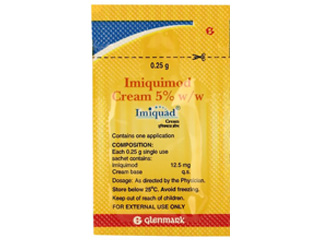
Brand names: Imiquimod may be marketed under different brand names in the UK. The active ingredient is the same, but the appearance, strength, and dosing schedule can vary between products.
How Imiquimod Works (Mechanism of Action)
Imiquimod belongs to a group of medicines known as topical immune response modifiers. When applied to the skin, it activates immune pathways—particularly those involving toll-like receptors (notably TLR7).
This activation helps trigger local immune activity, including increased production of immune signalling molecules such as:
- Interferon-alpha and other cytokines
- Enhanced activity of immune cells in the treated skin area
- Direct immune-mediated effects that help the body recognise and respond to abnormal cells or viral lesions
What this means in practice: imiquimod doesn’t simply “kill” the lesion instantly. Instead, it stimulates the immune response over time. That’s why improvement often takes several weeks, and local skin reactions are common.
Pharmacokinetics (Absorption, Distribution, Metabolism, Excretion)
Because imiquimod is applied to the skin, only a small portion typically enters the bloodstream. Key points include:
- Absorption: The amount absorbed through intact skin is usually low. Absorption may increase if the area is inflamed, ulcerated, or covered.
- Distribution: Systemic levels are generally low; imiquimod is not known to accumulate significantly with correct use.
- Metabolism: Like many drugs, it is broken down in the body (primarily through metabolism in the liver and other pathways).
- Excretion: Breakdown products are eliminated mainly via the kidneys and other routes.
Implication for patients: systemic side effects are uncommon when used correctly on limited areas. The most frequent effects are local reactions in the treatment area.
Typical Uses in the UK
Imiquimod has several established indications in the UK, depending on the product strength and formulation. Common approved uses include:
- External genital warts (HPV-associated lesions), in adults
- Actinic (solar) keratosis (pre-cancerous skin changes caused by UV exposure)
- Superficial basal cell carcinoma in selected cases (where appropriate under UK prescribing guidance and product licence)
Important note: Indications can vary by product licence, lesion type, and location. Always use imiquimod exactly as directed for your specific condition.
When to Start and How Long to Use (Timing)
Imiquimod is usually applied in a structured schedule. Depending on the condition being treated, dosing commonly involves applying it several times per week. Treatment duration can be weeks and sometimes longer, and improvement may continue after the last application.
Typical schedules (examples—check your exact product instructions):
- Genital warts: commonly applied three times weekly (e.g., Monday/Wednesday/Friday) for several weeks, or until clearance as advised.
- Actinic keratosis: commonly applied three to four times weekly for up to several weeks, depending on the product guidance and number of lesions.
- Superficial basal cell carcinoma: commonly applied several times weekly for a defined course, depending on the product and clinical situation.
Practical tip: choose fixed days and keep them consistent. If you miss a dose, apply it when you remember only if it’s still within the same day’s routine, and then continue the schedule. Avoid doubling up.
Food Interactions
Food interactions are not usually a concern for imiquimod because it is applied to the skin and systemic absorption is typically low. There are no common dietary restrictions linked to topical use.
However, if you are unwell, have significant skin irritation, or are taking other medicines, it’s always sensible to follow general medication advice from your healthcare professional.
Alcohol and Medicine Interactions
Alcohol
There is no well-established direct interaction between topical imiquimod and alcohol. Because systemic absorption is low, alcohol is unlikely to affect how imiquimod works.
Still: if you experience dizziness, flushing, or feel generally unwell from other treatments, consider how alcohol may worsen overall wellbeing and follow your other medicine advice.
Other medicines (including topical products)
Interactions with other medicines are generally unlikely to be significant due to low systemic absorption. However, practical interactions can still matter:
- Other topical medicines: avoid applying other creams, ointments, or medicated products to the same area unless your clinician specifically advises it.
- Barrier products and moisturisers: gentle moisturising can help with irritation, but ask your clinician or pharmacist about what to use and whether to apply it at a different time of day.
- Skin disinfectants/harsh cleansers: these may increase irritation. Use mild, fragrance-free cleansers.
- Immunosuppressive medicines: if you use treatments that suppress immune function, discuss this with your clinician. It may affect effectiveness.
Indications Explained: What Conditions Does It Treat?
Imiquimod’s effect depends on the underlying skin condition:
- External genital warts (HPV): helps your immune system recognise and clear wart-associated cells/viruses on the skin surface. Warts may look red or irritated during treatment.
- Actinic keratosis: a sun-damaged skin lesion that can develop into skin cancer. Imiquimod helps eliminate abnormal cells over time.
- Superficial basal cell carcinoma (selected cases): a less invasive form of skin cancer. Imiquimod may be used where appropriate and licensed for the specific situation.
Not for: imiquimod should not be used on broken skin unless specifically instructed, and it is not intended for internal body areas.
Dosing: How Much and How Often?
Dosing depends on the specific condition, product strength, and the size/location of the treated area. Always follow the instructions on your medicine packaging or those provided by your healthcare professional.
General principles for topical dosing:
- Apply a thin layer to the affected skin areas only.
- Use the correct schedule (e.g., three times weekly) rather than increasing frequency to “speed things up”.
- Wash hands before and after application (unless your hands are the treated area).
- Do not cover with airtight dressings unless advised; covering can increase absorption and irritation.
Example approach (for illustration only): many regimens are based on applying the cream at night and washing off in the morning. Your product instructions will specify the exact timing.
Step-by-Step: Practical Use Tips
Using imiquimod correctly can improve outcomes and reduce avoidable irritation.
- Prepare the skin: cleanse gently with water (or mild, non-irritating cleanser) and pat dry.
- Apply at the recommended time: many regimens recommend applying at night and leaving it on for a set number of hours.
- Use a thin layer: spread the cream on the lesion area and a small margin around it if advised (commonly “a thin film” over affected skin).
- Avoid eyes and mucous membranes: do not get the cream into eyes, inside the mouth/nose, or on internal genital areas unless explicitly instructed for a specific indication.
- Wash hands: unless the hands are part of the treated area.
- Remove as instructed: when the course requires it (often in the morning), wash off with mild soap and water.
What reactions are expected?
- Redness, swelling, itching, burning, flaking, or crusting can occur, especially as treatment progresses.
- In some conditions (especially wart treatment), visible changes may include darkening or ulceration of the treated lesion.
- These reactions are often part of the intended immune response, but severe symptoms may require medical advice.
Safety Profile: Side Effects and When to Seek Help
Local skin reactions are the most common side effects. Most are mild to moderate, and they often improve after the treatment course ends.
Common local side effects
- Redness (erythema)
- Swelling
- Burning or stinging
- Itching
- Dryness, flaking, or crusting
- Skin erosion or superficial ulceration (particularly on sensitive or genital areas)
Less common systemic effects
Because systemic absorption is typically low, systemic side effects are uncommon. However, some people may experience:
- Flu-like symptoms (fatigue, headache, muscle aches)
- Mild fever
Serious symptoms—stop and seek advice promptly
Seek urgent medical help or promptly contact a clinician if you experience any of the following:
- Severe skin pain, spreading inflammation, or rapidly worsening redness
- Signs of infection in the treated area (increasing warmth, pus, severe tenderness, fever)
- Severe swelling, blistering, or allergic-type reaction (widespread rash, difficulty breathing)
- Eye exposure (if the cream gets into the eyes, rinse thoroughly with water and seek advice)
Special precautions
- Sensitive skin areas: genital and facial areas may react more strongly—follow guidance carefully.
- Impaired skin barrier: avoid use on areas that are severely broken or infected unless directed.
- Children: use only if specifically approved and advised for the patient’s age.
- Pregnancy and breastfeeding: discuss with a clinician before use, especially for genital or large-area treatment.
Food and Lifestyle Considerations (Including Sexual Health for Genital Warts)
Imiquimod can be used for external genital warts, but it does not remove the virus instantly. During treatment:
- Use barrier protection (e.g., condoms) as advised to reduce transmission risk.
- Avoid sexual contact if the area is very sore, bleeding, or ulcerated, as this may increase discomfort and transmission risk.
- Be mindful of product contact: cream can transfer to partner skin. Follow clinician advice and keep the area covered only if instructed.
For actinic keratosis or skin cancer treatment sites, sun protection is crucial (see practical tips below).
Sun Protection and Ongoing Skin Care
For conditions related to sun damage (like actinic keratosis), ongoing prevention matters:
- Use a broad-spectrum SPF sunscreen daily.
- Avoid prolonged midday sun and use protective clothing where possible.
- Do regular skin checks and attend follow-up appointments as recommended.
Alternative Options
Depending on the condition, several alternatives may be considered. Options vary by lesion type, location, number of lesions, and patient preference.
For genital warts
- Other topical treatments (chosen by clinicians based on response and tolerability)
- Procedural options such as cryotherapy or removal methods
- Supportive measures for symptom relief and monitoring
For actinic keratosis
- Cryotherapy
- Other field therapies or lesion-directed treatments
- Photodynamic therapy in appropriate cases
For superficial basal cell carcinoma
- Surgery (often considered a standard approach for many lesions)
- Other topical or procedural treatments in selected circumstances
Discuss alternatives with your healthcare professional, especially if you experience significant irritation, have a recurrence, or need a different approach.
Market and Legal Context in the UK
In the UK, medicines containing imiquimod are regulated by UK authorities. The availability and product licensing depend on the specific formulation and indication. Patient-facing information and prescribing practices are guided by evidence-based dermatology and oncology recommendations, including:
- Product licence terms (what the medicine is authorised to treat, for which population, and how it should be used)
- NHS and specialist dermatology pathways for assessment, follow-up, and treatment selection
- Local antimicrobial and infection control guidance when lesions are ulcerated or at risk of secondary infection
Recent guidance (high-level): UK clinical practice continues to emphasise careful patient selection, correct application technique, sun protection for sun-related lesions, and follow-up to confirm response—particularly because actinic keratosis and basal cell carcinoma require monitoring for complete clearance and recurrence.
Delivery, Availability, and What to Expect When Ordering Online
Availability can vary by strength and indication. When ordering from an online pharmacy in the UK, you can usually expect:
- Discrete packaging for privacy
- Timely dispatch subject to stock status and ordering cut-off times
- Tracking information for delivery where available
- Clear dosage instructions included with the product
Storage: Keep the cream according to the label instructions (typically at controlled room temperature). Keep out of sight and reach of children.
Handling: Do not use the cream after its expiry date. If the tube or pump appears damaged, don’t use it—contact the pharmacy for advice.
FAQ
1) What does imiquimod feel like when I apply it?
Many people notice mild warmth, tingling, or a burning sensation—especially during the first applications or as irritation increases. Redness, itching, or flaking are common. If burning is severe or the skin breaks down significantly, contact a pharmacist or clinician.
2) When will I see results?
Improvement usually takes time. With correct use, changes can start within a few weeks, but complete clearance (where applicable) may take the full course duration, and sometimes lesions continue to improve after treatment stops.
3) Should I stop if my skin becomes very red or sore?
Some local redness and irritation are expected. However, very severe reactions, spreading inflammation, or signs of infection should be assessed. If you’re unsure, speak to a healthcare professional for tailored advice.
4) Can I use moisturiser or barrier creams?
Often, gentle moisturisers can help comfort. However, avoid applying other medicated or strong products to the treated area unless advised. If you use moisturiser, apply it at a different time (e.g., not immediately before application) and follow local guidance.
5) Can I use imiquimod on large areas?
Use on large areas may increase irritation and absorption. Treatment size and frequency should match your indication and product instructions. If you have many lesions, your clinician may advise a specific plan.
6) Is it safe to apply imiquimod after a bath or shower?
Yes, provided you dry the skin gently and apply at the correct time as directed. Avoid applying on overly damp skin.
7) Can I get pregnant or breastfeed while using imiquimod?
Discuss with a clinician. While systemic absorption is generally low, pregnancy and breastfeeding require individual risk-benefit consideration, particularly for genital or larger-area treatments.
8) What if the treated area ulcerates?
Some superficial erosion can occur. If ulceration is mild and within expected local reactions, it may settle after the course. If you develop severe pain, bleeding, pus, fever, or rapidly spreading redness, seek medical advice promptly.
9) Can my lesions come back after treatment?
Recurrence can happen, particularly with HPV-related genital warts. Sun-damaged lesions may also recur. Follow up with your clinician and continue preventive skin care, including sun protection.
10) Are there alternatives if imiquimod doesn’t work for me?
Yes. Alternatives depend on the condition and may include other topical treatments, procedures (like cryotherapy), or other therapeutic approaches. A clinician can recommend options based on your response and tolerability.
Summary
Imiquimod is a topical immune response modifier used in the UK for conditions such as external genital warts, actinic keratosis, and selected cases of superficial basal cell carcinoma. It works by stimulating local immune pathways, with low systemic absorption. Local skin reactions—redness, itching, burning, and crusting—are common and often reflect the medicine’s action in the treated area.
For the best results and safety, apply imiquimod exactly as directed, use gentle skin care, protect treated areas, and seek advice if symptoms are severe, infected, or rapidly worsening. If you have concerns about eligibility, dosing schedule, or suitability for your situation, speak to a healthcare professional or pharmacist.