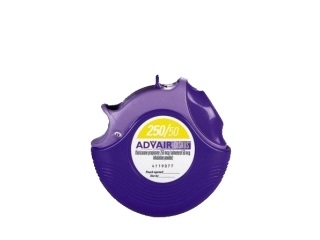
Advair Diskus (Salmeterol + Fluticasone) – Patient Information (UK)
Advair Diskus is an inhaler medicine used to help control long-term breathing problems. It combines two medicines in one device:
- Salmeterol – a long-acting bronchodilator (helps keep airways open)
- Fluticasone – an inhaled corticosteroid (helps reduce airway inflammation)
This page explains how Advair Diskus works, how to use it properly, safety information, interactions, and practical tips. It is written for people in the United Kingdom and uses UK-focused guidance and considerations.
What is Advair Diskus?
Advair Diskus is a dry powder inhaler (DPI). You breathe in through the mouth to deliver the medicine into your lungs. It is designed for maintenance (long-term control) of symptoms.
Common strengths (examples available in the UK) include combinations such as:
- 25 micrograms (mcg) salmeterol / 50 mcg fluticasone
- 25 mcg salmeterol / 125 mcg fluticasone
- 25 mcg salmeterol / 250 mcg fluticasone
Important: the exact available strengths and dosing vary by product. Always check the strength printed on your inhaler and follow the instructions provided by your healthcare professional or pharmacist.
How Advair Diskus works (Mechanism of Action)
Advair Diskus contains:
-
Salmeterol (long-acting beta2-agonist; LABA)
Salmeterol relaxes the smooth muscle around airways. This improves airflow and helps prevent symptoms such as wheeze, breathlessness, and chest tightness. Because it is long-acting, it supports control over a longer period.
-
Fluticasone (inhaled corticosteroid; ICS)
Fluticasone reduces airway inflammation, which helps reduce swelling and mucus. This can lower the frequency and severity of flare-ups/exacerbations over time.
Why the combination helps: salmeterol helps symptoms by opening the airways, while fluticasone addresses the underlying inflammation. Using both together often provides better control than using either medicine alone.
Pharmacokinetics (Absorption, Distribution, Metabolism, Elimination)
“Pharmacokinetics” describes what the body does to the medicine.
Inhalation and absorption
- Inhaled fluticasone deposits mainly in the lungs. A portion may be swallowed and later absorbed through the gastrointestinal tract.
- Salmeterol is delivered to the airways and absorbed to a lesser extent from the lungs and swallowed fraction.
Metabolism
- Both components are processed in the body largely through liver enzymes, especially CYP3A4 (important for interactions—see below).
Elimination
- The medicines and their metabolites are eliminated primarily through urine and/or bile/feces, depending on the specific compound and metabolism.
Clinical takeaway: Because metabolism involves CYP3A4, strong interaction medicines (for example some antifungals or certain antibiotics) can increase steroid exposure or salmeterol effects.
What is Advair Diskus used for?
In the UK, Advair Diskus is used to help manage long-term breathing disorders where symptom control depends on both bronchodilation and anti-inflammatory treatment.
Common indications include:
- Asthma – for people whose symptoms are not adequately controlled with an inhaled corticosteroid alone or who require combination therapy.
- Chronic Obstructive Pulmonary Disease (COPD) – for certain patients to help reduce symptoms and exacerbations, typically as part of maintenance therapy (the exact eligibility depends on disease severity and current guidelines).
Not for emergencies: Advair Diskus is not a reliever. It is for ongoing daily use. For sudden breathlessness or an asthma attack, a rapid-acting reliever (commonly a short-acting inhaler such as salbutamol) is usually used.
When should you use it? Timing and consistency
Advair Diskus is generally taken twice daily. Many people use a schedule such as:
- Morning (about the same time each day)
- Evening (about 12 hours later)
Consistency matters: regular use helps maintain control. If doses are missed, symptoms may gradually worsen.
Do not increase or stop suddenly: adjusting dose should be guided by a healthcare professional, particularly because fluticasone is a corticosteroid.
Dose and dosing schedule (General UK patient guidance)
Dosing depends on the condition (asthma vs COPD), severity, age, and response.
Typical regimen
- Adults and adolescents commonly use one inhalation twice daily from a specified strength.
Choosing the strength
Inhalers are labelled with the microgram amounts of salmeterol and fluticasone. Higher fluticasone doses provide a stronger anti-inflammatory effect, but may increase the risk of steroid-related side effects (though many risks can be reduced with correct inhaler technique and mouth rinsing).
Always follow the exact dosing instructions on your label. If you are unsure, check with a pharmacist.
How to use Advair Diskus (Practical use tips)
Good inhaler technique is essential for medicine to reach your lungs. The Diskus device is a dry powder inhaler—you must breathe in firmly and deeply.
Step-by-step overview
-
Prepare the dose
- Keep the device flat or upright.
- Open the mouthpiece (usually by sliding the lever until it clicks) to load a dose.
-
Check and breathe out
- Before inhaling, breathe out gently away from the mouthpiece.
-
Inhale the powder
- Place the mouthpiece to your lips.
- Inhale forcefully and deeply through the mouth.
- Keep breathing in as long as comfortable for best powder delivery.
-
Hold your breath
- Hold your breath for about 10 seconds or as long as comfortable.
-
Close and check
- Close the device (if your device uses a cover) and rinse your mouth if using for asthma or if advised.
Rinsing your mouth
Because fluticasone can cause thrush (oral fungal infection) or hoarseness, many people should rinse and spit after inhaling (especially for asthma). Ask your pharmacist or healthcare professional if this applies to your specific regimen.
Common technique problems
- Not inhaling strongly enough (powder may not disperse correctly).
- Breathing out into the device (can degrade powder).
- Wrong device handling (not clicking/ loading the dose correctly).
Tip: if your symptoms are not controlled, do a technique check before assuming the medicine “isn’t working”.
Food interactions
Food interactions are not usually significant for inhaled Advair Diskus because the medicine is delivered directly to the lungs. While some swallowed fraction may be absorbed in the digestive tract, food is not typically expected to meaningfully change the dose reaching the lungs.
Practical advice: take your doses at your usual times. If you notice heartburn or throat irritation, consider adjusting timing with meals, but do not expect food to drastically affect effectiveness.
Alcohol and medicine interactions
Alcohol
There is no well-known direct interaction between alcohol and the inhaled combination in Advair Diskus. However, drinking alcohol can:
- worsen symptoms for some people (e.g., triggering breathlessness or reflux)
- affect adherence (missed doses)
- increase risk of dizziness if other medicines are used
Practical advice: limit alcohol if you find it worsens your breathing or triggers reflux. Seek advice if you drink heavily or have liver problems.
Important medicine interactions (examples)
The most relevant interactions involve the liver enzyme CYP3A4 and the medicine class beta2-agonists.
- Strong CYP3A4 inhibitors (can increase fluticasone exposure): examples may include some antifungals (such as ketoconazole, itraconazole) and some antivirals (for example ritonavir). This can increase the risk of corticosteroid side effects.
- Beta-blockers (including some eye drops) may reduce bronchodilator effects. Some selective beta-blockers may be used in certain patients, but you should check with your clinician/pharmacist.
- Other medicines that can lower potassium (certain diuretics or high-dose steroids) may increase the risk of low potassium effects when combined with beta2-agonists.
- Xanthines (such as theophylline) and other beta-agonists may increase the chance of side effects like tremor or palpitations.
Always tell your pharmacist about all medicines you use, including over-the-counter products and herbal remedies. Interaction risk can vary with dose and your health conditions.
Safety profile (common and serious side effects)
Advair Diskus is generally well tolerated when used correctly. Side effects can be related either to fluticasone (steroid effects in the mouth/throat and sometimes systemic effects at higher doses) or to salmeterol (beta-agonist effects).
Common side effects
- Hoarseness/voice changes
- Throat irritation
- Oral thrush (white patches in the mouth)
- Headache
- Tremor or nervousness (more typical with beta-agonists)
- Palpitations
Less common but important effects
- Low potassium (hypokalaemia) (can cause weakness, cramps, abnormal heart rhythm in susceptible people)
- Raised blood sugar (especially in those predisposed to diabetes)
- Effects on adrenal function (risk increases with higher doses over long periods)
- Eye problems (in particular glaucoma/cataracts may be more likely with long-term steroid exposure)
Seek urgent medical advice if
- you experience severe breathing difficulty or signs of an asthma/COPD emergency
- you develop symptoms suggestive of an allergic reaction (swelling of face/lips, hives, difficulty breathing)
- you have chest pain, severe dizziness, fainting, or a very fast/irregular heartbeat
Do not use Advair Diskus to treat sudden attacks. Use your reliever medicine as instructed.
Practical use tips to reduce risks
- Check your inhaler technique at least periodically (pharmacies and clinics can help).
- Rinse and spit after dosing if advised to reduce thrush/hoarseness.
- Use the device regularly even when you feel well.
- Keep track of dose counts (Diskus devices typically show remaining doses).
- Watch for signs of infection in the mouth (thrush) or worsening symptoms that may require review.
- Do not “double up” if you miss a dose—check your regimen if you miss one.
- Confirm you have a reliever available for sudden symptoms.
Alternative options
Depending on your diagnosis and severity, options may include:
Other combination inhalers
- Different ICS/LABA inhalers (similar concept but different medicines or device type)
- Triple therapy inhalers for some COPD patients (often include an inhaled corticosteroid plus LABA plus a long-acting muscarinic antagonist)
Inhaled corticosteroid (ICS) alone
- May be suitable for some asthma patients depending on control and risk factors.
Reliever inhalers
- Short-acting bronchodilators (for quick relief) are separate from Advair Diskus.
Which option is right for you? This depends on your symptom pattern, exacerbation history, lung function, and side effect considerations. A clinician/pharmacist can advise based on current UK guidance.
UK market and legal context (overview)
Advair Diskus is an established respiratory medicine within the UK healthcare system. In the UK, inhaled therapies are typically used under National Health Service (NHS) and primary care prescribing pathways, guided by clinical frameworks and local formularies.
Medicines must be supplied and stored according to UK regulations. Patients should use inhalers according to the product instructions and any professional advice they have received.
Note: Product availability may vary by strength, manufacturer supply, and pharmacy stock. If a specific strength is unavailable, a pharmacy may suggest an equivalent alternative device or strength.
Recent guidance (UK-focused context)
UK respiratory guidance commonly emphasises:
- using inhaled medicines effectively with correct technique
- regular review of asthma control and stepping treatment up/down when appropriate
- for COPD, tailoring maintenance therapy based on symptoms and exacerbation risk
- ensuring patients have both controller therapy (e.g., ICS/LABA where appropriate) and a reliever plan for sudden symptoms
Because guidance can evolve, it is worth asking your clinician or pharmacist about the latest recommendations for your specific condition and severity.
Availability, delivery, and what to expect when ordering in the UK
As a commonly used inhaler, Advair Diskus may be available through a range of UK pharmacies. Availability depends on the strength and device stock at the time of order.
Delivery considerations
- Dispatch and delivery times vary by supplier and courier service.
- Some pharmacies offer standard delivery and may also offer faster options.
- Inhalers should be stored according to the instructions on the pack to maintain performance.
Storage reminder: keep the inhaler in a dry place, away from excessive heat. Do not expose it to moisture or store it in a bathroom cabinet.
FAQ – Common questions about Advair Diskus
1) Is Advair Diskus a reliever inhaler?
No. Advair Diskus is a controller (maintenance) medicine. It helps prevent symptoms over time. For sudden breathlessness, you should use your reliever inhaler as advised.
2) How quickly will it work?
Some people notice improvement within minutes to hours due to salmeterol’s bronchodilator effect. However, the anti-inflammatory benefit from fluticasone may take several days (and sometimes longer) to become fully noticeable.
3) What if I feel worse after starting it?
Occasional changes can happen, but persistent worsening is not expected. Check inhaler technique first and ensure you have your reliever available. Contact your healthcare professional if symptoms worsen or you need reliever more often than usual.
4) Can I stop Advair Diskus when I feel better?
Do not stop suddenly unless advised. Controller therapy is often needed to keep symptoms under control. Stopping may increase the risk of flare-ups.
5) How do I know when I’m low on doses?
Many Diskus devices include a dose counter. Check it regularly so you can order a replacement before you run out.
6) Will Advair Diskus cause thrush?
It can. The risk is reduced by rinsing your mouth after inhalation (if advised) and maintaining good technique. If you develop white patches, soreness, or pain in the mouth, contact a healthcare professional promptly.
7) Can I use it with other inhalers?
Often yes, but it depends on which other medicines you use. Your reliever inhaler is usually used for sudden symptoms. Tell your pharmacist about all inhalers you use so they can check compatibility and timing.
8) Are there any lifestyle tips that help?
- Stop smoking if you smoke, and avoid second-hand smoke.
- Keep vaccinations up to date if recommended.
- Use a written action plan for asthma/COPD if you have one.
- Exercise within your comfort level and follow pulmonary rehabilitation advice if appropriate.
9) What should I do if I miss a dose?
If you miss a dose, take it when you remember unless it’s close to the time of your next dose. Do not take a double dose to make up for a missed dose. If you’re unsure, ask a pharmacist.
Summary
Advair Diskus combines salmeterol and fluticasone to provide long-term control by opening airways and reducing inflammation. It is taken regularly (commonly twice daily) and must be used with correct inhaler technique. It is not designed for sudden relief—always ensure you have an appropriate reliever plan. If you have questions about dosing, technique, or interactions, a pharmacist can help you feel confident using your medicine.