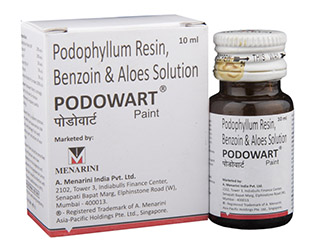
Podowart (Podophyllum resin) — Patient Information
Podowart contains podophyllum resin, a plant-derived medicine used to treat certain types of warts. This page explains how Podowart works, how to use it safely and effectively, what to expect, and important safety and interaction information for people in the United Kingdom.
Please read the leaflet supplied with your medicine. If you are unsure whether Podowart is suitable for you (for example, if you have pain, bleeding, an unusual appearance, or warts in sensitive areas), speak to a pharmacist or healthcare professional.
Quick overview
- Medicine: Podophyllum resin (Podowart)
- Used for: Local treatment of selected external warts
- How it works: Destroys wart tissue by interfering with wart cell growth
- Typical schedule: Applied for a short course over several days, with rest periods (follow your leaflet)
- Common effects: Temporary redness, burning, irritation
- Key safety: Do not apply to large areas or broken skin; avoid eyes and internal use
Basic product information
| Feature | What it means for you |
|---|---|
| Active ingredient | Podophyllum resin (podophyllotoxin-containing resin) |
| Medicinal form | Topical solution (strength and formulation may vary by pack) |
| Route | Applied to the outside skin/wart only |
| Where it is used | Selected external warts as described in the product leaflet |
| How long it takes | Wart tissue may take days to dry and detach; complete clearance varies |
How Podowart works (mechanism of action)
Podophyllum resin contains compounds that can damage wart cells. Warts are caused by human papillomavirus (HPV). Podowart is applied directly to the wart so that it acts mainly locally.
The resin has effects that can stop wart cells from growing and dividing, leading to progressive destruction of the abnormal tissue. As the treated tissue dries, it may shrink and separate.
Pharmacokinetics (how the body handles it)
With topical use, only a small amount may be absorbed through intact skin. Absorption can increase if the area is large, broken, inflamed, or if the product is used more frequently than recommended.
- Absorption: Generally limited when applied correctly to small areas.
- Distribution: Potentially minimal because the medicine is intended to act on the surface.
- Metabolism & elimination: As with many compounds, absorbed fractions are processed and removed by the body.
Because systemic exposure is usually low with correct use, side effects are typically local. However, incorrect application can increase the risk of more serious effects.
What Podowart is used for (indications)
Podowart is used to treat selected external warts caused by HPV. The exact wart type and location depend on the product’s instructions.
- External warts on the skin that match the leaflet instructions
- Some formulations are marketed for specific sites; always check the leaflet before use
Do not use Podowart for warts that are:
- Inside the body (for example, deep in the vagina, urethra, rectum, or on internal surfaces)
- On eyelids/around the eyes
- On areas where the leaflet specifically advises against use
- Unclear in diagnosis (for example, a sore that is bleeding, rapidly growing, painful, or unusually coloured)
When to apply it (timing and course)
Timing depends on the product leaflet and pack instructions. A common approach with podophyllum-based wart treatments is:
- Apply only to the wart and surrounding area as directed
- Use at the recommended frequency for the number of days specified
- Observe rest periods if the leaflet suggests alternating days of treatment
- Stop and seek advice if severe irritation, worsening pain, or signs of infection occur
If your pack provides a specific regimen (for example, morning and evening on certain days), follow it exactly.
Dosing (how much to use)
Podowart is intended for small, local applications. In practice, dosing is often described by:
- How much product: a thin layer/appropriate amount to coat the wart surface
- How often: the frequency listed in your leaflet
- How many days: the total course length given
Because warts vary in size and number, avoid “extra” applications. Using more or for longer than recommended can increase the risk of local burns and systemic side effects.
Always: apply using the applicator provided (if included) and only to the intended wart area.
Practical step-by-step use tips
Correct technique matters. The goal is to treat the wart while protecting the surrounding skin.
Before you start
- Wash your hands before and after application.
- Use clean skin and avoid applying to wet or broken areas unless your leaflet allows it.
- If possible, check the wart’s appearance in good light.
Applying Podowart
- Protect surrounding skin: cover nearby healthy skin if your leaflet suggests using a barrier. If not stated, keep the product strictly on the wart.
- Apply carefully: use the provided applicator to coat the wart only. Avoid spreading onto healthy skin.
- Let it dry: avoid touching the area until the medicine has dried (if required by the leaflet).
- Wash hands: to prevent accidental transfer to eyes or other body parts.
Aftercare
- Avoid friction and irritation on the treated area.
- If the area becomes sore or inflamed, do not “top up” beyond instructions.
- If the wart looks worse, becomes ulcerated, or you develop severe pain, stop and seek advice.
Food interactions
Podowart is used on the skin and is not taken by mouth. Food interactions are not expected for topical use. However, if you feel unwell or experience irritation that affects eating or drinking, seek guidance.
Alcohol and medicine interactions
There are no common direct alcohol interactions expected with topical podophyllum resin, because systemic absorption is usually low when used correctly.
That said, caution is still sensible:
- If you use multiple medicines for warts or skin problems, avoid combining products on the same area unless a pharmacist advises it.
- If you are taking other medicines that affect the skin (for example, strong topical irritants), tell a pharmacist before use.
- Avoid contact with eyes and mucous membranes, as irritation can mimic or worsen side effects.
Safety profile and side effects
Like all medicines, Podowart can cause side effects. Many are local and resolve after treatment. Report severe reactions promptly.
Common local side effects
- Redness or swelling around the treated wart
- Burning, stinging, or tenderness
- Itching
- Skin irritation or peeling
- Crusting or tissue drying
Less common but more serious reactions
- Severe ulceration or blistering
- Signs of infection: increasing pain, pus, fever, spreading redness
- Allergic reactions (rare): rash beyond the treatment area, swelling, breathing difficulty
- Accidental contact with eyes or internal tissues causing intense irritation
When to stop and seek urgent advice
- You develop severe pain or rapidly worsening skin damage
- There is significant bleeding, uncontrolled ulceration, or suspected infection
- You have applied to an incorrect area (for example, mucous membrane) or it has spread where it shouldn’t
Precautions in special groups
- Children: use only if the product leaflet permits and as advised by a pharmacist or clinician.
- Pregnancy and breastfeeding: consult a healthcare professional before use. Topical treatments should be assessed for suitability.
- Immune system problems: if you are immunocompromised (for example, due to medication or illness), warts may be more persistent—seek advice early.
- Diabetes or poor circulation: be cautious with skin injury and seek advice if irritation is significant.
Safety guidance for correct and safe use
- Only for external use as described in the leaflet.
- Do not apply to large areas or multiple sites unless instructed.
- Do not use on broken skin, open wounds, or infected skin unless your clinician specifically advises it.
- Keep away from eyes and mouth.
- Wash hands thoroughly after application.
- Do not reuse applicators or transfer product to other people.
Indications vs when to consider other treatments
Podowart may be suitable when you have appropriate external warts and can apply the product carefully. However, it may not be the best choice if:
- The wart is on a site where the leaflet advises against this product
If you are unsure, a pharmacist can help you select the safest and most appropriate option.
What to expect during treatment
- Early changes: you may notice redness or a mild burning sensation soon after application.
- Tissue changes: the wart may darken, dry, or become crusted.
- Separation: treated wart tissue can detach over time.
- Clearance time: outcomes vary. If there is no improvement after the recommended course, seek advice.
Avoid picking or scraping the wart. Let the medicine work, and protect surrounding skin.
Alternative options for wart treatment
Wart treatments differ by wart type, location, and skin sensitivity. Depending on your situation, your pharmacist or GP may suggest:
- Other topical treatments: for example, salicylic acid preparations (often used for common warts)
- Cryotherapy: freezing treatment by a clinician or via services where available
- Immunotherapy approaches: in some cases, treatments that support immune response
- Procedural removal: if warts are persistent, widespread, or causing complications
Choose based on the wart location and whether you can apply the treatment safely.
United Kingdom market and legal context (patient-friendly)
In the UK, medicine availability depends on classification and intended use. Many wart treatments are available from pharmacies, and some may be provided through clinical services depending on wart type and location.
Product labelling, age restrictions, and advice for particular sites are important. In addition, public health guidance commonly emphasises:
- Accurate identification of the condition (not all lumps or bumps are warts)
- Safe self-treatment only when appropriate for the site and severity
- Seeking professional advice if there are symptoms that could suggest another diagnosis
For the latest local guidance, you can also consult NHS resources or speak to a pharmacist.
Recent guidance and when to consult a clinician
Guidance in the UK typically advises people to seek medical input if:
- The wart does not improve after the recommended course
- Warts keep returning
- The wart is painful, bleeding, ulcerated, or rapidly changing
- There are warts in sensitive areas where self-treatment may be inappropriate
- You have a weakened immune system
Because HPV and wart presentations can vary, clinicians may confirm diagnosis and tailor treatment accordingly.
Delivery and availability in the UK
Podowart is commonly stocked by UK online pharmacies depending on current availability and product lines. Delivery options may vary by provider and location.
- Availability: Subject to stock and supplier schedules.
- Dispatch: Orders are usually dispatched promptly after payment verification.
- Delivery areas: Typically available across the UK mainland and may vary for Northern Ireland, islands, and offshore locations.
- Packaging: Discreet packaging is often used for pharmacy items.
If you have questions about delivery times to your postcode, check the store’s delivery information at checkout.
FAQ
1) How quickly will Podowart work?
Many people notice changes within days, such as drying or crusting. Full clearance varies. If the wart does not improve after the course described in the leaflet, seek advice from a pharmacist or healthcare professional.
2) Can I use Podowart on any wart?
No. Podowart is for specific external warts as described in the product instructions. Avoid use on warts in locations not recommended by the leaflet, and do not treat sores or lumps that could be something else.
3) What should I do if I accidentally get Podowart on healthy skin?
Stop and rinse the area with plenty of water as soon as possible. If you develop significant irritation, blistering, or pain, contact a pharmacist for advice.
4) Is it safe to drink alcohol while using Podowart?
Direct alcohol interactions are not expected with topical podophyllum resin when used correctly. If you experience irritation or feel unwell, allow the skin to settle and ask for guidance.
5) Can I use Podowart with other skin products?
Avoid applying other strong or irritating products to the same area unless your leaflet or a pharmacist advises it. Combining treatments can increase irritation or make it harder to tell what is helping.
6) Will Podowart stop HPV transmission?
Podowart treats the wart tissue, but HPV can still be present in surrounding skin. To reduce the risk of transmission, consider barrier methods and discuss prevention with a pharmacist or healthcare professional, particularly for genital areas.
7) When should I get medical advice instead of continuing at home?
Seek advice if you have severe pain, spreading irritation, signs of infection, uncertain diagnosis, warts in areas not suitable for self-treatment, or if there is no improvement after the recommended course.
8) What if my warts come back after treatment?
Warts can recur because HPV may remain. If warts return, consult a pharmacist or clinician to discuss the best approach, which may involve different treatments.
9) Can I use Podowart during pregnancy or breastfeeding?
Check with a healthcare professional before use. Wart treatment decisions during pregnancy or breastfeeding should consider safety and the specific wart location.
Summary
Podowart (podophyllum resin) is a topical treatment designed to destroy selected external wart tissue by disrupting wart cell growth. When used correctly—applied carefully to the wart only and according to the leaflet—it can help warts dry and detach. Mild irritation is common, but severe reactions require prompt advice. If you are unsure about suitability, wart type, or placement, speak to a pharmacist for guidance.